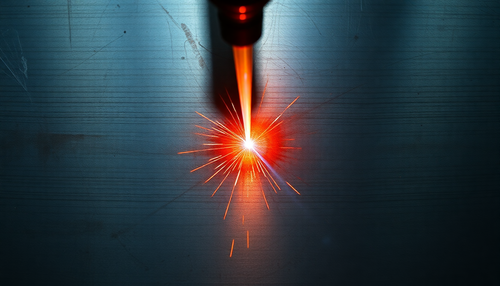

What is a metal laser cutter?
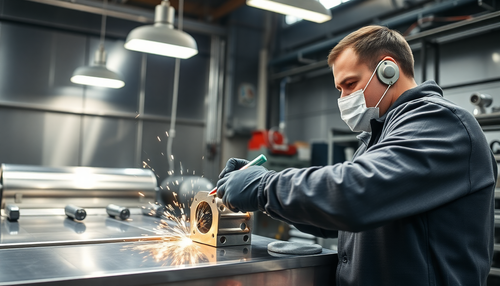
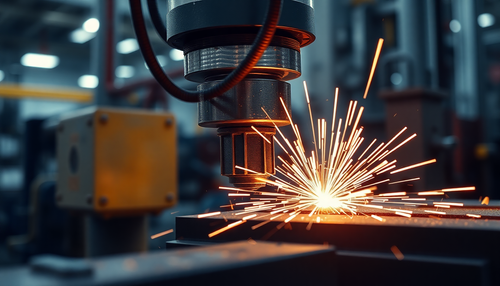
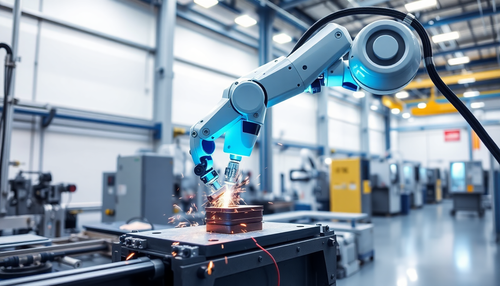
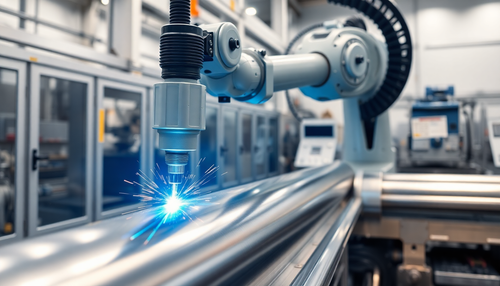
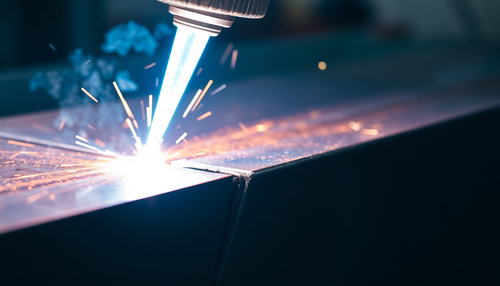
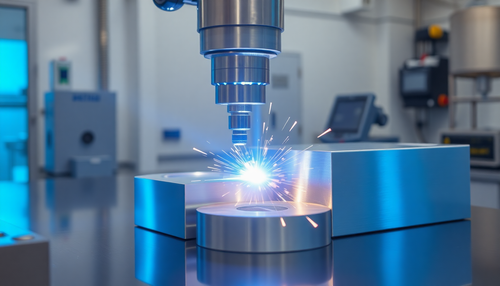
Metal laser cutting machine is a laser cutting machine specially designed for cutting and processing metal materials.
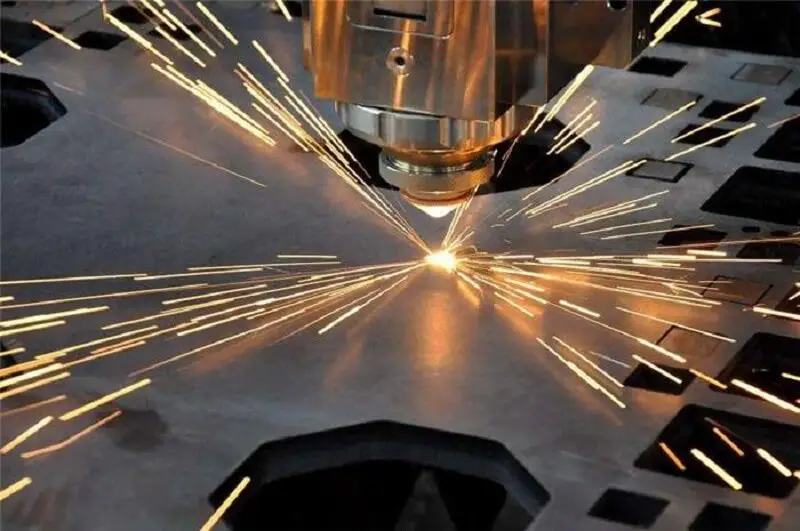
In general, it is recommended to use a CO2 laser cutting machine for cutting carbon steel sheets up to 20mm, stainless steel sheets up to 10mm, acrylic, wood and other non-metallic materials.
Laser cutting machines have high cutting power and no deformation during processing.
No tool wear, good material adaptability.
Simple and complex parts can be cut with laser precision in a single step.
It has narrow slit, good cutting quality, high degree of automation, easy to operate, low labor intensity and no pollution.
It can achieve automatic nesting cutting, nesting, improving the utilization of materials, which has low production cost and good economic efficiency.
Laser cutting machine selection has many factors to consider. In addition to the maximum size of the part to be processed, the material, the maximum thickness to be cut and the width size of the raw material, it is necessary to consider the future direction of development. Such as the technical adaptation of products made after the maximum size of the part to be processed, the steel market to provide the material width for its products that is most economical, loading and unloading time, etc.
Laser cutting machines are a technological revolution in sheet metal processing, the “processing center” in sheet metal processing.
The laser cutting machine has high flexibility, fast cutting speed, high production efficiency and short product cycle, which wins a wide range of markets for customers.
The effective life of the technology is long. Foreign metal sheets over 2mm thick are mainly cut with laser cutting machines, and many foreign experts agree that the next 30-40 years will be the golden era of the development of laser processing technology.
Development perspective
M market demand
Although still in the preliminary stage of development, the laser industry in China has made a significant leap forward under the leadership of international science and technology and gained significant prominence on the global stage.
The market demand for laser cutting machines in China is very high, with a market worth tens of millions of dollars, providing new growth opportunities in the industry.
Since the birth and application of the first laser equipment in the 1960s, numerous Chinese experts have made significant contributions to the development of the laser industry, achieving international standards.
The production of complete sets of industrial equipment for laser technology has enabled China to overcome its dependence on foreign technology, filling the gap in the domestic laser industry.
The rapid growth of the domestic economy has made the laser industry a backbone of the high-growth market, with an annual growth rate of more than 20%, becoming a driving force for the global laser market.
Experts predict that the domestic laser market will continue to grow rapidly, possibly doubling in the future, and expand the laser cutting equipment market, filling the gap in the domestic market.
This growth will enable China's high-quality laser equipment to break free from its current limitations and become a leading force in the international market.
B resorption technology
Since not all machines and equipment are perfect, metal laser cutting machines also have some shortcomings.
If the metal laser cutting machine wants to develop further, it must advance with the following technology.
- It improves the mechanical structure construction of the metal laser cutting machine, which is mainly reflected in the beam and frame of the machine.
If a metal laser cutting machine wants better development, it must break through the lightness and flexibility of the metal laser cutting machine beam, as well as the high rigidity and high stability of the machine structure.
This will further improve the metal laser cutting machine's cutting accuracy and usage flexibility.
- Improves metal laser cutting machine CNC technology.
A perfect modern machine needs to have a high-quality control system.
High quality control system can make operation simpler, improve efficiency and reduce error due to manual operation.
- It can improve the high-power laser beam transmission focusing technology of metal laser cutting machine.
Beam quality is the key to the cutting quality of metal laser cutting machine.
Good focusing technology can make the object to be processed more beautiful, so as to achieve the desired effect.
- Improves the proprietary technology of metal laser cutting machines.
This includes edge monitoring, capacitance height tracking, cutoff monitoring, and penetration detection.
- It improves the special CAD/CAM software system of metal laser cutting machine.
In this way, it can better cooperate with laser cutting graphics conversion, making writing complex part programs simple and easy, and very convenient to edit and modify.
Therefore, it is very important to develop and design a special CAD/CAM software system.
- It improves the head design of high power metal laser cutting machine, only continuous innovation will not be driven out by the market.
- It improves metal laser cutting process research, especially for curved surface cutting, titanium alloy material cutting and thick plate cutting research process, etc.
Metal laser cutting is currently one of the best processing equipment. I believe that in the near future our metal laser cutting machine will be further improved. To meet the needs of our market.
Grades
- Observe general cutting machine safety operating procedures.
It must be strictly in accordance with the laser start-up procedures to start the laser, dimming and testing machine.
- Operators must be trained to be familiar with cutting software, equipment structure, performance and knowledge of operating systems.
- Use labor protection equipment in accordance with regulations and wear protective glasses that meet regulations near the laser beam.
- Do not process the material until it is clear whether it can be irradiated or laser cut to avoid the potential danger of smoke and vapor.
- When the equipment is turned on, the operator must not leave the station or be attended to without authorization.
If it is necessary to leave, the operator must stop the machine or turn off the power switch.
- Keep the fire extinguisher within reach;
Turn off the laser or shutter when not working;
Do not place paper, cloth or other flammable materials near the unprotected laser beam.
- When an abnormality is found during processing, the machine must be shut down immediately and the fault must be eliminated or reported to the supervisor.
- He must keep the laser, laser head, base and surrounding area clean, orderly and free from oil, work pieces, metal sheets and piled waste in accordance with regulations.
- When using gas cylinders, you should avoid crushing the welding wires to avoid leakage accidents.
The use and transportation of gas cylinders must comply with gas cylinder supervision regulations.
It is prohibited to explode gas cylinders in the sun or near heat sources.
When opening the bottle valve, the operator must stand next to the bottle mouth.
- Observe high voltage safety regulations when repairing.
Every 1 day of operation or weekly maintenance, every 1000 hours of operation or every six months of maintenance, which must be carried out in accordance with regulations and procedures.
- After starting the machine, it should manually start the machine tool in the X, Y and Z directions at low speeds and check whether there are any abnormalities.
- After entering the new part program, it must first test and verify its operation.
- When working, attention should be paid to observing the operation of the machine tool to prevent the cutting machine from leaving the effective travel range or accident caused by two collisions.
maintenance service
Every product requires good maintenance to ensure a longer lifespan, and this is no exception for metal laser cutting machines. So how should we maintain them to achieve a high and stable life expectancy?
Cleaning dust and metal impurities
Dust cleaning is part of the daily maintenance of each machine, and a clean and tidy machine is essential to ensure product quality. Metal laser cutting machines are mainly used for metal processing, and although the cut metal is usually blown, there may still be some residue, so it is important to clean these impurities.
Regular maintenance and usage statistics
Every part of the metal laser cutting machine must be inspected and recorded regularly. Ineffective parts must be replaced immediately to ensure the machine operates in an optimal working environment. Defective parts can negatively affect the overall performance of the machine.
Common Problems
- The burr solution when cutting low carbon steel.
- The solution to abnormal sparks when cutting low carbon steel.
- Analysis of burrs produced on parts during laser cutting of stainless steel and Al-Zinc sheets.
- The most common problem with laser cutting machines is material deformation during punch processing.
- Incomplete laser penetration analysis
After analysis, the main conditions that cause processing instability are presented below:
- The selected laser head nozzle does not match the processing thickness.
- Laser cutting line speeds are very high and require operational controls to reduce line speed.
- Inaccurate nozzle detection leads to large errors in laser focus position and requires rechecking of nozzle detection data, especially when cutting aluminum.
According to the working and design principles of CO2 laser cutting, solutions to these common problems can be made based on the metal laser cutting machine processing method and material analysis.
Cutting material
Materials processed by metal laser cutting machines exhibit high reflectivity to infrared energy at room temperature, although CO2 lasers that emit 10.6um beams in the far infrared band are successfully applied in many metal cutting practices. metal laser.
The initial absorption of 10.6um laser beams by metals is only 0.5% to 10%, but when focused laser beams with power densities greater than 106w/cm2 are directed at a metal surface, the surface begins to melt quickly in microseconds.
The absorption rate of most metals in the molten state increases dramatically, typically 60% to 80%.
Carbon steel:
Modern laser cutting systems can cut carbon steel plates with a maximum thickness of 20 mm. Using oxidative melt cutting mechanism to cut carbon steel can control the width of the cutting slit in a satisfactory range, with the slit of thin plates being as narrow as 0.1mm.
Stainless steel:
Laser cutting is an effective tool for manufacturing industries that use thin stainless steel sheets as the main component. By strictly controlling the heat input in the laser cutting process, the heat-affected zone on the cutting edge can be limited to a minimum, which is very effective in maintaining the good corrosion resistance of the material.
Alloy steels:
Most alloyed structural and tool steels can be laser cut to achieve good edge quality. Even for some high-strength materials, straight and non-sticky slag cutting edges can be obtained, provided that the process parameters are adequately controlled. However, for high-speed tool steels and hot die steels containing tungsten, melting and slagging may occur during laser cutting.
Aluminum and alloys:
Aluminum cutting uses a melting and cutting mechanism, and the auxiliary gas used is mainly to blow the molten product from the cutting area to obtain better cutting surface quality. For some aluminum alloys, attention should be paid to avoid intergranular microcracks on the cutting surface.
Copper and alloys:
Pure copper (copper) with very high reflectivity cannot be cut with a CO2 laser beam. Brass (copper alloy) uses higher laser power and the auxiliary gas uses air or oxygen, which can cut thinner plates.
Titanium and alloys:
Pure titanium can be well coupled to the thermal energy of the focused laser beam. The auxiliary gas uses oxygen when the chemical reaction is intense, leading to faster cutting speed, but an oxide layer may be generated on the cutting edge and carelessness will also cause excessive burning. For safety, using air as an auxiliary gas is better to ensure cutting quality. The quality of titanium laser cutting commonly used in aircraft manufacturing is better, although there is a little slag at the bottom of the cut, it is easy to remove.
Nickel Alloy:
Nickel-based alloys, also known as superalloys, come in many varieties. Most of them can be cut by oxidative melt cutting.