Need for networks and labels in circuit design:
In small circuits, we can connect components directly with wire (using the “put wire” option). But in complex circuits like motherboard circuit, we may have to establish many connections between different sections where many connections may overlap. Therefore, there is a chance of getting confused in circuit design. Furthermore, the probability of getting errors is greater. We can overcome this problem by using Net Labels.
Net: Net is a simple electrical connection between components. We can create a network using place wire.
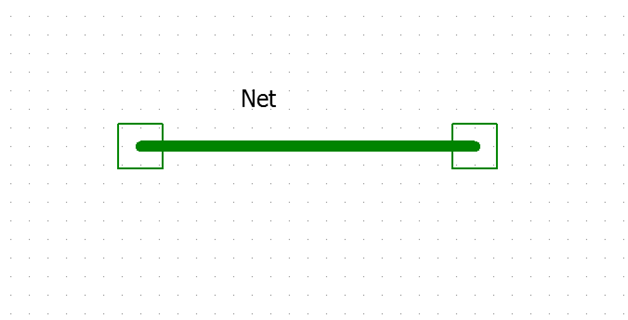
Fig. 1: Image showing a network on PCB layout
Network name (label): Each Network has its own name, but it is not visible. Furthermore, we can assign a name to any Net. This is also called local label. It is very useful in complex circuits. If we give the same name to different networks in different locations, it means that there is only one electrical connection between many components. This can simplify the circuit.

Fig. 2: Image showing the network name on the PCB layout

Fig. 3: Image showing the network name on the PCB layout
Global labels: Net Global labels are similar to Net local labels, but the only difference is that local labels are identical labels on the same sheet. On the other hand, global labels can be connected even between different sheets.
Hierarchical Labels: It can establish a connection between a sheet and a parent sheet.

Fig. 4: Circuit Diagram Image
We can see in the image above that different components are connected using local and global labels. Between the LCD and the microcontroller, connections are made directly through wires. But local labels are used between ADC and microcontroller. This reduces the complexity in making connections.

Figure 5: Image of a component
There are simple, identical connections between the microcontroller and the ADC, within one sheet. If we are using another sheet to extend the circuit, we will need to use global labels to connect the power supply. If we are using the same power supply labels on another sheet, there is no problem. But if we use local labels, we cannot use the same labels in another sheet.

Fig. 6: Image showing simple electrical connections
If we are designing a large and complex circuit, global and hierarchical labels are very useful in maintaining connectivity between leaves.
Labels will save the designer time and reduce circuit complexity and confusion.
To place local labels:
1. Place the wire > local label (or right click and “Add label”) > assign any name.
2. Select Global label > assign any name. Place it in the desired location > connect it with wire.

Fig. 7: Image showing Network with Label